More Shakti

Dear Friends,

I'm still learning so much from Shakti Gawain's book, Living in The Light, that I just had to share more of my favourite passages with you.

Shakti Gawain

In the chapter entitled The World as Our Mirror, Shakti reminds us that the physical world is our creation. That we each create our very own version of the world, our particular reality, our unique life experience. And just as an artist looks at his latest creation to see what works well and what doesn't, we can look at the ongoing masterwork of our lives to appreciate who we are and to recognize what we still need to learn.

She tells us to see the external world as a giant mirror which reflects both our spirits and our forms clearly and accurately. Viewed in this way, the external world can teach us about hidden aspects of ourselves that we can't see directly.

The Mirror Process is based on two premises:

1. I assume that everything in my life is my reflection, my creation; there are no accidents or events that are unrelated to me. If I see or feel something, if it has any impact on me, then my being has attracted or created it to show me something. If it didn't mirror some part of myself, I wouldn't even be able to see it. All the people in my life are reflections of the various characters and feelings that live inside of me.

2. I try never to put myself down for the reflections I see. I know that nothing is negative. Everything is a gift that brings me to self awareness; after all, I'm here to learn. If I was already perfect I wouldn't be here. Why should I get angry at myself when I see things I've been unconscious of? It would be like a first grader getting frustrated because he wasn't in college yet. I try to maintain a compassionate attitude toward myself and my learning process. To the extent that I can do this, the learning process becomes fun and really quite interesting.

I am learning to view my life as a fascinating and adventurous movie. All the characters in it are parts of me played out on the big screen so that I can clearly see them. Once I see them and recognize their various feelings and voices inside myself, it is easy to choose which characters to keep and expand, and which ones to let go of or transform.

If the movie portrays problems, hassles, or struggles, I know I must check inside to find out where I'm not being true to myself. I also know that when I'm trusting and being myself as fully as possible, everything in my life reflects this by falling into place easily, often miraculously.

The author goes on to say that in being true to yourself, you will feel more alive. But you may also feel uncomfortable. This is because you are risking change. As you undergo certain changes, you may experience intense emotions. She encourages you to allow these emotions to express themselves, to let the feelings come up and flush through you -- they are being cleaned out and healed by the light.

External feedback is also a great mirror: your doubts and fears will often be reflected in the reactions of those around you. If your friends and family question or judge the changes in you, recognize that they are simply mirroring the doubting, fearful voices in you, such as, "What if I'm doing the wrong thing? Can I really trust this process?"

Respond to such feedback from others in whatever way you feel is appropriate: reassure them, ignore them, argue with them, whatever. The important thing is to recognize that you are really dealing with your inner fears. Affirm that you are learning to trust yourself more and more. You will be amazed to see how others immediately mirror your increasing self-trust and confidence by responding to you with trust and confidence.

Remember:

If you judge and criticize, others will judge and criticize you.

If you hurt yourself, others will hurt you.

If you lie to yourself, others will lie to you.

If you are irresponsible to yourself, others will be irresponsible in relation to you.

If you blame yourself, others will blame you.

If you do violence to yourself emotionally, others will do violence to you emotionally, or even physically.

If you don't listen to your feelings, no one will listen to your feelings.

If you love yourself, others will love you.

If you respect yourself, others will respect you.

If you trust yourself, others will trust you.

If you are honest with yourself, others will be honest with you.

If you are gentle and compassionate with yourself, others will treat you with compassion.

If you appreciate yourself, others will appreciate you.

If you honour yourself, others will honour you.

If you enjoy yourself, others will enjoy you.


All in all...start creating your masterpiece!


Hugs and Loads of Love,
Mudd
xoxo

If you want to know more about Shakti and how to purchase her books, go to her website by clicking here.

Questions or not, I'd love to hear from you. Please email me at
anxietybuster@gmail.com or simply click the link on the sidebar.

Love Your Body

Hello Beautiful Souls!

Sorry I was away for so long. I've been celebrating my birthday since August 16 -- bathing in the love of family and friends, eating out, having fun, enjoying every bit of what life has to offer. I thought of you many times, trying not to feel guilty about not posting. I must say I'm happy to be back, and hope I'm not only older, but wiser as well.

To continue on our journey, I'd like to share with you yet another book, one that is bringing me much comfort these days: Living in The Light, A Guide to Personal and Planetary Transformation, by Shakti Gawain.

In it, there's a chapter entitled Your Perfect Body where the author tells us to appreciate our body, to focus on what we like about ourselves. She says that the more willing we are to do this, the easier it will become. That our body will respond to this appreciation and grow increasingly beautiful.

For me, my body is still a preoccupation, and this bothers me. I'd like to think I'm past being concerned with the physical -- but no. I've heard that it's common for people who have been sexually abused to think they are ugly, to not like their body. Well, that's exactly how I've felt most of my life. Even if I've worked hard to break away from this negative belief, there are times when I find myself struggling with the way I look. So I've been following a few of Shakti Gawain's suggestions, and already I feel a better connexion with my body. Here are a few of my favourite exercises for you to try out.


Ritual For Loving Your Body

Stand naked in front of a full-length mirror. Send positive thoughts to every part of your body. Even if you don't like your body or don't approve of certain parts of your body, look for something of beauty in every part of yourself. Realize that your body has been serving you for years. Thank your body for its service. Realize it has only been following your directions.

For example, you might say to yourself, "You have beautiful, thick, shiny hair." Then look in the mirror at your hair and see its beauty, its shine and glow. Even if it isn't shining and glowing as much as you like, continue to see it and appreciate yourself as you are, saying, "I love the way you look. You have beautiful hands. You have strong, healthy legs. You have clear skin. You have shining eyes."

Run through each part of your body in this way and really send it love and appreciation. Find a way to appreciate every part of yourself. And thank your body for being with you for however many years, following your desires and serving you. It has been doing for you what you have asked of it. If you like, you can play music that you love, and use candles or flowers while performing this ritual. Do this ritual once or twice a day for at least a week. This ritual shows your body how much you appreciate and respect it. Your body has been criticized, judged, and rejected by you for years. It will respond quickly to love and energy. You will feel lighter and more energized. You will start looking more beautiful. The lines in your face will relax. You will start to glow with strength and health. You will be amazed at the results of loving your body.


Visualization Exercises

  1. Whenever you think of your body, see it the way you want it to be. Know that your body is perfect and affirm this. Take a few minutes during the day to close your eyes and visualize your body at the weight, size, and strength you desire. See your body as energized and powerful. See and feel energy moving through you.
  2. Use a picture from a magazine to help you visualize your perfect body. Choose a picture of a body that looks the way you would look in great shape, cut it out, and paste it on the wall. Place it where you'll look at it daily. See the picture as your body. You can even paste a picture of your face on the picture so it's your face with your perfect body.


Meditation

Sit or lie down in a comfortable position. Take a few deep breaths and relax your body. With each exhalation, let go of what you don't want or need; see any tension, frustration, or tiredness leave your body. As you inhale, take in everything you want or desire: relaxation, serenity, strength, prosperity, and joy.

From this relaxed, rejuvenated place, see your body before you. Imagine your body looking exactly the way you want it to be. Observe it in as much detail as possible. You are now your perfect weight, size, and shape. Your body is energized, strong, and powerful. When you look at your face and body, you see your beauty. You look exactly the way you want to look. You feel the way you want to feel.

You can feel what it is like to have a body that supports your spirit. Your spirit says "do this" and your body, in all its perfection, is there to match your inner wisdom.

You are beauty, strength, and energy.


Big Hugs,
Mudd
xoxo

To purchase Living in The Light, go to Amazon.com by clicking here.

Questions or not, I'd love to hear from you. Please email me at
anxietybuster@gmail.com or simply click the link on the sidebar.


Guilty or Not Guilty?

Hi Friends!

Now here's a fun book to browse through.

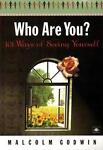
Who Are You? 101 Ways of Seeing Yourself is designed to help you find out more about yourself. It contains 101 mirrors of self-discovery in which you can recognize your dominant behavior, your body type, how you feel and act, how you think and approach your spirituality.

The author, Malcolm Godwin, has drawn "tests" from ancient and modern techniques from both the East and the West, and these "tests" are divided into four sections -- the body, the emotions, the intellect, and the spirit. Each assessment takes no more than a few minutes to complete, and is accompanied by a brief description of the history and principles behind the method or technique.

Definitily a great way to understand how others see you...
and how you see yourself.

Some of the tests you'll find in the book:

  • Are you left-brain or right brain dominant?
  • How well do you cope with emotional stress?
  • How do you think? -- Verbally? Analytically? Spatially?
  • What does your palm tell about your personality?
  • What type are you spiritually? -- Prayerful? Philosopher Sage? Devotee?


Here's an excerpt taken from the chapter on Feeling Types:


Do You Plead Guilty or Not Guilty?

The propensity to feel guilty or anxious about our behavior is a character trait that is commonly found today. Most of us are uneasy about certain aspects of our personalities. Often we blame ourselves even when our behavior hardly merits any punishment whatsoever. A certain level of guilt is, of course, necessary for some awareness of conscience. Indeed, its complete absence would be symptomatic of the extremes of psychopathy. Excessive self-abasement or recrimination, on the other hand, reveal an equally neurotic and unbalanced attitude.

Assessment

Do you:

  1. feel you have spent much of your life doing things you don't really enjoy?
  2. hate your present job?
  3. feel bad if you let other people down?
  4. worry about other people's opinion of you or your actions?
  5. avoid doing things that might upset your friends?
  6. find it difficult to sleep until noon on weekends, even when there is nothing urgent to do?
  7. spend time in a shop trying on clothes and then feel bad if you leave without buying anything?
  8. send birthday cards to people you don't really like?
  9. feel upset if someone unexpectedly found you doing something intimate and private?
  10. dress in clothes that will please others?
  11. feel bad when you think of times you have been rude or thoughtless?
  12. find yourself apologizing for something that is not really your fault?
  13. say sorry when someone steps on your foot?
  14. feel you have let down your parents by not living up to their expectations?
  15. agree with the concept of original sin -- that you are born a sinner who must be redeemed?
  16. feel that we all need some social or religious control over our natural instincts?
  17. feel that Roman Catholics are right to have regular confessions of their sins?
  18. sense a general disapproval from others about your person or behavior?
  19. feel that you should be punished for past sins?
  20. often pray for forgiveness?

Key:

Answer "yes" to 16 or more of the questions and you can be sure that at some time someone has programmed both you and your emotional center to feel guilty.

A score of 4 - 6 would suggest a healthy conscience.

A score of under 3 suggests you are either enlightened or a psychopath!


For more ways to learn who you are, check out the book at Amazon.com by clicking here.

Big hugs,
Mudd
xoxo

P.S.: Questions or not, I'd love to hear from you. Please email me at
anxietybuster@gmail.com or simply click the link on the sidebar.


Health Anxiety

Anxiety creates all kinds of weird impressions. For years, I thought I was afflicted with a whole bunch of ailments and life-threatening diseases. I was sure I had all the symptoms, but I probably created them all because of how I worried so much about dying.

Here's a book I would have loved to read during that period: It's Not All in Your Head, by Gordon J.G. Asmundson, PhD, and Steven Taylor, PhD.

It's Not All in Your Head: How Worrying about Your Health Could Be Making You Sick--And What You Can Do about It Cover

In it, the authors explain that like other forms of anxiety, health anxiety involves changes in thoughts, physiology, and behavior. Also like other forms of anxiety, health anxiety can range from mild to severe. Mild health anxiety can be temporary and can sometimes be a signal to follow up on some bodily change or sensation by seeking advice from a doctor. But it can also be excessive and preoccupying. When health anxiety is out of proportion to the risk of disease and persists even though there is no evidence of disease, mental health professionals often refer to it as a health anxiety disorder. Like the other anxiety disorders, it has an impact on all aspects of health. The trick, of course, lies in figuring out what is out of proportion and inappropriately persistent. That is, how much is too much?


The Whiteley Index

Over the years, a number of tests have been developed to assist researchers and doctors in evaluating patients for health anxiety. The authors have found that the Whiteley Index is particularly useful for self-assessment. Here are the questions asked:

Answer YES or NO.

  1. Do you often worry about the possibility that you have got a serious illness?
  2. Are you bothered by many pains and aches?
  3. Do you find that you are often aware of various things happening in your body?
  4. Do you worry a lot about your health?
  5. Do you often have the symptoms of very serious illness?
  6. If a disease is brought to your attention (through the radio, television, newspapers, or someone you know), do you worry about getting it yourself?
  7. If you feel ill and someone tells you that you are looking better, do you become annoyed?
  8. Do you find that you are bothered by many different symptoms?
  9. Is it easy for you to forget about yourself, and think about all sorts of other things?
  10. Is it hard for you to believe the doctor when he or she tells you there is nothing for you to worry about?
  11. Do you get the feeling that people are not taking your illness seriously enough?
  12. Do you think that you worry about your health more than most people?
  13. Do you think there is something seriously wrong with your body?
  14. Are you afraid of illness?

Give yourself a point for every YES response to all questions except number 9, for which you get a point if you answered NO.

This should produce a score between 0 and 14. Higher scores indicate higher levels of health anxiety. A score of 8 or more usually indicates a high probability of a health anxiety disorder.

If you scored 8 or higher, try getting your hands on this book. It will provide you with the building blocks for learning strategies that will help you change the way you think about and respond to the bodily sensations that you are now interpreting as disease related. You'll learn the relationship between health anxiety and other mental health conditions, including the anxiety disorders and depression, which often co-occur with excessive health anxiety, as well as methods you can use to self-assess anxiety and mood disorders.

You can purchase It's Not All in Your Head at Amazon.com by clicking here.

Big hugs,
Mudd
xoxo

P.S.: Questions or not, I'd love to hear from you. Please email me at
anxietybuster@gmail.com or simply click the link on the sidebar.

Let's Relax

I just came across this very interesting website called Mind.

In the Mind Guide To Relaxation, they talk about the link between stress and relaxation, what may be wrong with the way we relax, and how to introduce more relaxation into our everyday life.

Here's a glimpse of what you can find on their site:


Regular practice
You need to have deep relaxation practices daily, or even twice a day, at the beginning. When learning any new skill, such as how to drive a car, ride a bicycle, play an instrument or perform a dance routine, you need to concentrate on each movement, at first. With regular practice and repetition, the skills become second nature and you do them automatically. It's the same with learning to be more relaxed in day-to-day living.

  • If possible, plan to set aside a specific time for your regular practice. (Once you start appreciating how enjoyable relaxation is, you will look forward to it as a period of peace and pleasure).
  • If you can, choose a quiet place to practise relaxation. It's easier to learn if you are not interrupted by loud sounds, the telephone or people coming in. When you become really good at relaxation, you will be able to 'switch off' even in noisy, busy environments.
  • It's impossible to relax if you are cold, so make sure you are comfortably warm.
  • Avoid practising relaxation when you are hungry or just after eating a meal.
  • If you use a tape or CD player on remote, have the handset close by so that you can operate it without difficulty.
  • Sometimes, young children enjoy relaxing with a parent, doing the exercises and then snuggling up to enjoy the peace and stillness.

Don't worry about whether you're doing everything correctly. Never try, just do! And enjoy the feeling!


Effective positions for relaxation


• Ensure table is close and arms are not stretched out
• Alternatively, kneel beside a bed
guide to relaxation
guide to relaxation

• Support under head, neck and knees
• Head should be level, not tilted back or pushed forward

• Knees high enough to reduce tension in tummy
• Legs on chair sideways
• Support right up to behind knees
• Good for relieving lower backache
guide to relaxation
guide to relaxation

• 'Old' recovery position
• Support under head and knees
• Good if pregnant


• Support under pelvis
• Good if overweight or with large/ heavy bust
guide to relaxation
guide to relaxation

• Back fully supported by chair
• Chin and thighs parallel to the floor
• Feet and ha


For more information, go the the Mind website by clicking here.


And now, RELAX!

Hugs,
Mudd
xoxo

P.S.: Questions or not, I'd love to hear from you. Please email me at
anxietybuster@gmail.com or simply click the link on the sidebar.


Date Rape

It's happened to me more than once.

I thought for many years that it was my fault. That I had it coming to me because of the way I dressed, the way I acted, the way I drank.

But I know better now.

And I want all young people to know that date rape is RAPE, period.

young couple kissing

In The Truth About Rape -- a book intended for teenagers -- the authors make this clear. They point out that when most people think of rape, they think of stranger rape, where the victim is stalked, followed, and attacked by someone he or she did not know.

But more than 80 percent of all reported rapes are committed by an acquaintance and can occur at home or away from home. Usually, the victim trusts the assailant.

Similar to acquaintance rape are date rape and partner rape. More than 60 percent of acquaintance rapes take place during a date. In most cases, an accused rapist, abuser, or defendant never admits he or she has committed an act against someone or even that he or she committed a crime. Assailants may also deny ever physically or sexually hurting anyone. When a sexual assault is reported and the abuser identified, abusers may admit that they did it but try to make it sound as if the victim consented or "wanted it." The abuser might say that the victim "deserved it."

The authors go on to say that beliefs about rape vary according to the type of rape that occurred. Most people would not consider the victim to blame if the rape was perpetrated by a stranger. However, if the rapist is known to the victim, the woman is more likely to be blamed.

Some people believe that when someone is sexually assaulted or raped, the man or the woman somehow "asked for it" by dressing in revealing clothing, flirting, or showing signs of encouragement.

Here are some of the myths and misinformation about date rape:

  • "Maybe" means "yes."
  • If a woman has previously been sexually active, she will probably be willing to have sex with other men.
  • If a woman agrees to any sexual contact, including kissing or fondling, she has agreed to "go all the way."
  • If a woman has had sex with a man once, she will be willing to have sex again.
  • Buying dinner or gifts entitles a man to have sex with his date.
  • Date rape is the result of miscommunication.
  • Rape happens only when a stranger forces a woman to have sexual intercourse.
  • Rape occurs only when there is physical violence or a physical struggle.

young couple kissing

PREVENTING DATE RAPE

Psychologists and other counselors suggest that individuals take special precautions at parties and other gatherings. Those precautions include:

  • Watching while a beverage is poured or accepting drinks only from bottles or cans that partygoers have opened for themselves.
  • Never leaving a beverage unattended.
  • Avoiding alcohol or drugs while on a date.
  • Calling a friend if feeling sick or dizzy after drinking and, if necessary, calling 911.

Some experts suggest that women:

  • Meet in public places on the first few dates with someone they don't know well.
  • Do not go to a date's car or home or to their own home if they will be alone there.
  • Plan to take public transportation home or arrange to have someone they know pick them up after a date.
  • Set sexual limits and make their dates aware of those limits.
  • Clearly communicate their expectations to their dates.
  • Stay sober. It is easier to be in control of a stiuation when one is not under the influence of alcohol or drugs.
  • Trust their instincts. If a woman feels uneasy or threatened in a situation, she should get away as quickly as possible. There is no need to explain or find an excuse to leave if one feels uncomfortable.

If you or someone you know is a victim of a date rape, psychologists and other health-care professionals suggest the following:

  • Go to a friend's place. If there is no one to go to, call someone you can talk to, no matter how late it is.
  • Get medical attention. Do not shower, bathe, or change your clothing first. Go to a hospital or health center to be examined and treated for possible venereal disease. There may also be internal injuries. If you decide to press charges, physical specimens collected soon after the rape may be valuable evidence.
  • Report the attack even if you do not plan to file charges. Someone who has raped once is likely to rape again. If you turn the rapist in, you may save someone else from being attacked.
  • Get help and support. You have been through a trauma and need help to deal with the situation and your feelings. People who seek counselling get over their experiences faster and with fewer lasting effects than those who do not get help.
young couple kissing

It's a sad world when one cannot go out on a date without having to worry about being raped. Especially when you're out with someone you've known for weeks, months, years even.

But better to be safe than sorry.

So be careful.
Tell your kids, your friends.
Share this information.

And be well, my friends!

Love always,
Mudd
xoxo

To buy The Truth About Rape by Judith Harper, Kathryn Hilgenkamp, Laura Kittross, and Mark J. Kittleson, Ph. D., go to Amazon.com by clicking here.

The Truth About Rape (Truth About)

P.S.: Questions or not, I would love to hear from you.
Please email me at
anxietybuster@gmail.com
or simply click the link on the sidebar.


Zen Story


Two monks were once traveling together down a muddy road. A heavy rain was falling. Coming around the bend, they met a lovely girl in a silk kimono and sash, unable to cross the intersection.

"Come on, girl," said the first monk. Lifting her in his arms, he carried her over the mud.

The second monk did not speak again until that night when they reached a lodging temple. Then he no longer could restrain himself. "We monks don't go near females," he said. "It is dangerous. Why did you do that?"

"I left the girl there," the first monk said. "Are you still carrying her?"

Just Be Yourself

Overpowered? Overextended? Overworked?

Here's another interesting little book:
Simplify Your Life, 100 Ways To Slow Down And
Enjoy The Things That Really Matter.

In way number 73, the author -- Elaine St. James -- has these words for us:

Have you ever stopped to think about how much energy you spend -- and how much you complicate your life -- by pretending to be someone other than who you are? We all do it. It's part of being human, and it was also a big part of the fast-paced life-style of the 1980s.

A good exercise is to sit down and go through all the major areas of your life and decide how each would be different if the only person you had to impress was you. Would you have a different career? What kind of house would you live in? Would you drive a different car? How would you dress? How would you spend your spare time? Would you be married to the person you're married to? Would you have the same friends?

Often we assume various layers of pretense not so much out of our own needs, but because of someone else's. How often are we untrue to ourselves because of the pressures of our family, the demands of our mate, the entreaties of our children? If your life-style reflects someone else's idea of how your life should be, take a few moments to imagine how much simpler it would be if you dropped the pretense and learned to just be yourself.

Throughout the book, Elaine's short texts cover everything from reducing the clutter in your life, to cutting your laundering chore in half, to building a simple wardrobe, to cleaning up your relationships. She will help you simplify your household, your life-style, your job, your health, and your personal life.

If you think your life is too complex, if you crave simplicity,
check out her book at Amazon.com by clicking here.

Let's get back to the essentials and enjoy life's every precious moment!

Love always,
Mudd
x0x0

P.S.: Questions or not, I'd love to hear from you. Please email me at
anxietybuster@gmail.com or simply click the link on the sidebar.


An Ancient Oracle

On January 1, 1991, my good friend Michael was slowly dying in a hospital room, and I stopped by to wish him a Happy New Year and to continue our conversations on death, karma and rebirth.

I remember that day vividly because I was feeling down in the dumps for reasons that don't matter any more but at the time, they were choking me out of my every breath.

So though Michael's life was being eaten away by lymph node cancer, he was the one to lift my spirit on that cold and gloomy afternoon. That's when he gave me the gift of ancient wisdom...

Out from under the sheets, he pulled a small, worn-out, burgundy satin pouch and a frayed little blue book. He handed me the pouch and told me to reach inside and play around with the 25 flat stones till one of them felt good in my hand, till I knew this was the one I was drawn to. When I became ready to pick one, I took it out and noticed the sign, carved into the stone and painted a rich, dark brown.

Upon seeing the sign I had chosen, Michael thumbed through his book, stopped at the corresponding page, and gave it to me to read. I was amazed at how appropriate the message was for what I was living at the moment. The words were soothing, encouraging, reassuring.

The next day, I purchased The Book Of Runes, by Ralph Blum, and still treasure it along with the stones -- mine rest in a dark blue velvet pouch. For years, they have given me guidance and have filled my soul with wisdom, love, and light.

In the preface to the book, Dr. Martin D. Rayner, Professor of Physiology at the University of Hawaii School of Medicine, points out how the Runes are healing and merciful. He encourages us to play with the possibility that they can provide "a mirror for the magic of our Knowing Selves," a means of communication with the knowledge of our subconscious minds. He asks you to remember that you are consulting an Oracle rather than having your fortune told. An Oracle does not give you instruction as to what to do next, nor does it predict future events. An Oracle points your attention towards those hidden fears and motivations that will shape your future by their unfelt presence within each present moment. Once seen and recognized, these elements become absorbed into the realm of choice. Oracles do not absolve you of the responsibility for selecting your future, but rather direct your attention towards those inner choices that may be the most important elements in determining that future.


So now, after lighting a candle and a stick of amber-sandal incense, not knowing who you are or what you're going through at the moment, I picked a Rune for you. Here is the message it carries:

Algiz

Protection
Sedge or Rushes
An Elk

Control of the emotions is at issue here. During times of transition, shifts in life course and accelerated self-change, it is important not to collapse yourself into your emotions -- the highs as well as the lows. New opportunities and challenges are typical of this Rune. And with them will come trespasses and unwanted influences.

Algiz serves as a mirror for the Spiritual Warrior, the one whose battle is always with the self. The protection of the Warrior is like the warning rustle of the sedge grass or like the curved horns of the elk, for both serve to keep open space around you. Remain mindful that timely action and correct conduct are the only true protection. If you find yourself feeling pain, observe the pain, stay with it. Don't try to pull down the veil and escape from life by denying what is happening. You will progress; knowing that is your protection.

All my love,
Mudd

P.S.: Questions or not, I'd love to hear from you. Please email me at
anxietybuster@gmail.com or simply click the link on the sidebar.

To purchase The Book Of Runes, go to Amazon.com by clicking here.


The Healing Stages


One of the books that helped me along the path to recovery is
The Courage To Heal - A Guide For Women Survivors
Of Child Sexual Abuse
, by Ellen Bass and Laura Davis.

The authors explain that healing is not a random process, that there are recognizable stages that all survivors pass through. They provide you with a map of those stages, enabling you to see where you are, what you've done already, and what's yet to come.

They also specify that healing is not a linear process. A common analogy for the healing process is that it's like a spiral. You go through the same stages again and again. But traveling up the spiral, you pass through them at a different level, with a different perspective. You might spend a year or two dealing intensely with your abuse. Then, you might take a break and focus more on the present. A year or so later, changes in your life -- a new relationship, the birth of a child, graduation from school, or simply an inner urge -- may stir up more unresolved memories and feelings, and you may focus in on it again, embarking on a second or a third or a fourth round of discovery. With each new cycle, your capacity to feel, to remember, to make lasting changes, is strengthened.

Here now are The Stages as presented by Ellen and Laura. Please note that although most of these stages are necessary for every survivor, a few of them -- the emergency stage, remembering the abuse, confronting your family, and forgiveness -- are not applicable for
every woman.

The Decision To Heal

Once you recognize the effects of sexual abuse in your life, you need to make an active commitment to heal. Deep healing happens only when you choose it and are willing to change yourself.

The Emergency Stage

Beginning to deal with memories and suppressed feelings can throw your life into utter turmoil. Remember, this is only a stage. It won't last forever.

Remembering

Many survivors suppress all memories of what happened to them as children. Those who do not forget the actual incidents often forget how it felt at the time. Remembering is the process of getting back both memory and feeling.

Please Donate Online Today

Believing It Happened

Survivors often doubt their own perceptions. Coming to believe that the abuse really happened, and that it really hurt you, is a vital part of the healing process.

Breaking Silence

Most adult survivors kept the abuse a secret in childhood. Telling another human being about what happened to you is a powerful healing force that can dispel the shame of being a victim.

Understanding That It Wasn't Your Fault

Children usually believe the abuse is their fault. Adult survivors must place the blame where it belongs -- directly on the shoulders of the abusers.

Making Contact With The Child Within

Many survivors have lost touch with their own vulnerability. Getting in touch with the child within can help you feel compassion for yourself, more anger at your abuser, and greater intimacy with others.

Trusting Yourself

The best guide for healing is your own inner voice. Learning to trust your own perceptions, feelings, and intuitions forms a new basis for action in the world.

Grieving And Mourning

As children being abused, and later as adults struggling to survive, most survivors haven't felt their losses. Grieving is a way to honor your pain, let go, and move into the present.

Anger - The Backbone Of Healing

Anger is a powerful and liberating force. Whether you need to get in touch with it or have always had plenty to spare, directing your rage squarely at your abuser, and at those who didn't protect you, is pivotal to healing.

Disclosures And Confrontations

Directly confronting your abuser and/or your family is not for every survivor, but it can be a dramatic, cleansing tool.

Forgiveness?

Forgiveness of the abuser is not an essential part of the healing process, although it tends to be the one most recommended. The only essential forgiveness is for yourself.

Spiritual Guided & Self-guided Tours

Spirituality

Having a sense of a power greater than yourself can be a real asset in the healing process. Spirituality is a uniquely personal experience. You might find it through traditional religion, meditation, nature, or your support group.

Resolution And Moving On

As you move through these stages again and again, you will reach a point of integration. Your feelings and perspectives will stabilize. You will come to terms with your abuser and other family members. While you won't erase your history, you will make deep and lasting changes in your life. Having gained awareness, compassion, and power through healing, you will have the opportunity to work toward a better world.

http://religions-and-spiritualities-guide.com/image-files/the-spiritual-path.jpg

Do I hear "Amen?"

Yeah...Amen!

Hugs and Healing Light,

Mudd
xoxo

P.S.: Questions or not, I'd love to hear from you. Please email me at
anxietybuster@gmail.com or simply click the link on the sidebar.

Crippled Soul

I was sexually abused when I was 3, 4, 5 years old. He was my father's co-worker and friend. He "did it" to me while my father was out supposedly buying cigarettes, but I know now that Dad was out drinking and "doing it" with prostitutes.

For a good part of my life, I blocked the memory of these events. Well, not completely, because I had recurrent dreams, felt sick at my stomach, had this disgusting taste in my mouth, and spent years feeling ugly, stupid, unworthy of love.

Of course, I didn’t “choose” to be this way. I didn’t understand what was going on with me. I tried my best to get out of this rut. I went to school, worked hard, had friends, went to partys, started to work, got married, had children… But there was always this haunting inside of me that just wouldn’t go away. I read books, meditated, prayed, went all out in trying to find a “cure” for this “thing” that was controlling my mind, destroying my life, and affecting those around me, family, friends, my beautiful children.

I escaped into art – writing, drawing, music – thinking that expressing myself would solve the problem. There were many wonderful days, months, when all was sunshiny and bright. But soon, the gloom would envelop me and drag me down into depths that grew darker and colder as the years went by.

I’d put on a happy face, do my best to be strong, to hide my depression, because I didn't want to scare everybody away with my heavy disposition. I helped others with their problems, thinking this would make mine go away. I did volunteer work with troubled teens and sick, elderly people. I spread as much love as I could.

But the haunting continued.

So much so that I contemplated suicide many times. I understand a mother who kills her children and then kills herself because I’ve thought of that. I used to judge these women, but now I don’t. Please understand that I don’t say this is okay, no way! But I’ve lived the “lure” of such a pull. That’s exactly what suicide becomes: a lure. It pulls you, it’s like an enchanting trance. You’re so tired, exhausted with all the fighting to get up every morning and do the most ridiculous little things that have become huge mountains, you suffer such a non-physical pain, you’re so frustrated that you can’t tear at it, that you are pulled, hypnotized by the lure of suicide.

Ten years ago, I was completely down, diagnosed as bipolar (manic-drepressive), suffering from panic and anxiety attacks which eventually developed into agoraphobia. I still associated good times with drinking, but I wasn't drinking that much because I knew it wasn't the solution to my problems. Still, the association was there.

I smoked a lot of pot. Not all the time, but for periods of 1 to 3 months, I would smoke every day, dreaming my life away. Then I'd stop for months because I'd get fed up with myself and too tired to get out of my rut.

I was broke, had no social life, was afraid that it would be almost impossible for me to regain confidence and move on with whatever I wanted to achieve. Did not have any trust in finding any help from professionals.

I felt old and ugly.

I hated my body. Always had, in some way. Though I'd never been fat, I'd always felt fat. So I'd binge on chips and chocolate for a day or two, and then go for weeks without eating much. Over and over and over again, binge, starve, binge, starve.

I slept most of the day, stayed up at night.
Reading, watching television,
dreaming of a better life.
Crying a lot.

Going out of my mind.
Living with the thought of dying.

Six years ago, fed up and finally facing my sexual abuse issues, I did the "do or die" thing and went looking for help. For the third time in fifteen years.

I got an appointment at a mental health clinic, trembled through it, and was scheduled to see a psychologist.

From June 2003 to June 2005, I went through one-on-one therapy
with a psychologist, group therapy for panic and anxiety, and
group art therapy for sexual abuse.

Since then, no more depression,
no more panic attacks.

I’m grateful that I finally got to understand what had happened to me and how this affected my life. I’m grateful that I had the strength to go on living, believing that there was an answer. I’m grateful that I finally found therapists that were warm, loving people, not just “professionals”. I’m grateful that I can now love myself, and that I can trust not only myself, but others too.

These days, I take one step at a time.

Baby steps...

I do my best to not compare myself to others, to not put pressure on myself. I believe that each step will build momentum, that the momentum will grow, and that I will attain my goals.

I'm grateful for where I'm at, conscious that I'm not perfect...and that I don't have to be.

And I'm determined to have FUN, no matter what!

To all the crippled souls out there, never cease to look for help.
Trust that you will find it. Believe the Universe
will not abandon you.

Look up and smile...
Stand up and walk...
You are crippled no more!

All my love,
Mudd
xoxo

P.S.: Questions or not, I'd love to hear from youl. Please email me at
anxietybuster@gmail.com or simply click the link on the sidebar.


To Sweat Or Not To Sweat


In keeping with today's lesson, I'm reminded of a book
my son introduced to me last year.

Book Cover

Written by Richard Carlson, Ph.D., Don't Sweat The Small Stuff...and it's all small stuff shows you how to keep from letting the little things in life drive you crazy. How to put things in perspective.

Here's a most appropriate excerpt for what happened to me today:

Make Peace With Imperfection

I've yet to meet an absolute perfectionist whose life was filled with inner peace. The need for perfection and the desire for inner tranquility conflict with each other. Whenever we are attached to having something a certain way, better than it already is, we are, almost by definition, engaged in a losing battle. Rather than being content and grateful for what we have, we are focused on what's wrong with something and our need to fix it. When we are zeroed in on what's wrong, it implies that we are dissatisfied, discontent.

Whether it's related to ourselves -- a scratch on the car, an imperfect accomplishment, a few pounds we would like to lose -- or someone else's "imperfections" -- the way someone looks, behaves, or lives their life -- the very act of focusing on imperfection pulls us away from our goal of being kind and gentle. This strategy has nothing to do with ceasing to do your very best but with being overly attached and focused on what's wrong with life. It's about realizing that while there's always a better way to do something, this doesn't mean that you can't enjoy and appreciate the way things already are.

The solution here is to catch yourself when you fall into your habit of insisting that things should be other than they are. Remind yourself that life is okay the way it is, right now. In the absence of your judgment, everything would be fine. As you begin to eliminate your need for perfection in all areas of your life, you'll begin to discover the perfection in life itself.

For more of Richard's wisdom, visit his website by clicking here.

Hugs always,
Mudd

P.S.: Questions or not, I'd love to hear from you. Please email me at
anxietybuster@gmail.com or simply click the link on the sidebar.

Life Lessons

I didn't know it at the time, but there's a lesson
to be learned from my previous post.

You see, prior to posting "Inspiration Corner," I was feeling guilty that I hadn't written anything yesterday, and I was a bit upset that I wasn't in that great of a writing mood today, either. But instead of beating myself up, instead of putting major strain on myself for not being Mizz Perfect Blogger, I opted to post a simple quote. It was better than nothing, I thought, and my conscience would be soothed till my inspiration came back.

Well, that's exactly what happened: I made it short and sweet, pressed the publish button, and lo and behold, I felt at peace with myself, as well as with you the readers, and the shroud of anxiety that had begun to envelop me was gently removed. I was relieved.

And now, just a few hours later, I'm back to my chatty self again. How quickly moods change! That's why it's important not to let yourself go when the doldrums roll in. Go with the gloom, I say, and do the best you can. Even if it's doing the laundry or sorting the mail, washing your hair or tidying up your closet, just MOVE! As long as you do one little thing, no matter how insignificant it may seem, you'll feel much better. You'll take the pressure out of everyday life.

Baby steps... always remember
that it's all about baby steps.

Be light. Be happy. Be well, my friends.

Hugs,
Mudd

P.S.: Questions or not, I'd love to hear from you. Please email me at
anxietybuster@gmail.com or simply click the link on the sidebar.
xoxo

Inspiration Corner

Hello!

I admit, there are days when not knowing what to write can cause anxiety. I care for you, I want to provide you with interesting information, but sometimes I wish I could just be silent, look in your eyes and see your soul, reach out and touch your hand.

So here's my way of reaching out to you today: this beautiful quote I found on my screensaver this morning.


If a little dreaming is dangerous,

the cure for it is not to dream less
but to dream more, to dream all the time.
- Marcel Proust

I've been receiving inspirational words every morning for over four years. If you're interested, you can download PaperQuote screensavers by clicking here.

Pleasant dreams to all...

Mudd
xoxo

P.S.: Questions or not, I'd love to hear from you. Please email me at
anxietybuster@gmail.com or simply click the link on the sidebar.

Game Time

Hello!

Family life can be pretty rock and roll. The frantic pace involves the
juggling of career responsibilities, carting children to day care and
soccer practice, homework and housework.
With all this going on,
there's not much time left for families to "connect", to slow down
and have fun.

If you only find connection through sitting in front of the television set, then you're missing out on quality time with your children. Nowadays, you can barely even do that, because the kids are either surfing the Web or spending hours playing video games.

Some families have committed to a regular "Game Night" where they all get together and play a good ol' board game. This way, you get to actually talk to each other -- developing communication skills is important --, and many families notice how these activities help them become reacquainted with one another.

One place you really should be playing games is when you're on a car trip. Because long rides can become boring and cause stress to both children and parents. If you want to stave off the inevitable "Are we there yet?", then try the following travel game that is both fun and educational.


What If

All you need for "What If" is some imagination and maybe a map. Some of the best games you'll ever play with your kids are games that involve creativity and imagination.

In this game, you pose a "what if" scenario to your child or children, and they have to describe the conditions and possibilities.

For example: Ask the kids, "What if the car trip we're taking was actually in a covered wagon?" The questions the kids should consider answering are things like:

  • How long would the trip take?
  • How many times would you have to stop to feed and water the horses?
  • What would you eat?
  • How much water would you need to bring?

You can look at the map with the children and try to imagine what the country looked like with single lane dirt roads. What kind of obstacles would you encounter on these roads?

A map is an excellent prop for this game. Use some of your historical knowledge to liven up the discussion. If you have time before the trip, study up on the history a little bit and offer information to the children to liven up their imaginations. You can even bring along a couple of books on the topic. If someone else is driving, you can always look at the pictures in the book with the children and talk about what life in the "olden days" was like. If you are the only one driving, brush up on the geography before the trip with the kids, circle highlights on the map, and have the kids spot them as you continue the journey.

You can even set up an even more imaginative scenario: What would the trip be like if you did it a thousand years from now? Would you be traveling to other planets? What kind of vehicle would you be traveling in? What kind of fuel would it take? What would you be eating and drinking? What obstacles could you encounter?

Kids will love this game. There's no history lesson to teach, just a lot of creative energy to indulge.

For more games, get The Complete Idiot's Guide To Family Games, by Amy Wall.

Bon Voyage!

Mudd
xoxo

P.S.: Questions or not, I'd love to hear from you. Please email me at
anxietybuster@gmail.com or simply click the link on the sidebar.


Julia's Basic Tools: FREE PDF Download

Hi!

I just took a stroll on
Julia Cameron
's
Julia Cameron
website and found a free PDF download.

It's called The Basic Tools, and you can download
the 16-page document if you click here.

You'll get to learn all about Morning Pages
and maybe get as addicted to them as I am.

I also discovered there's a Forum on her site.
Go check it out...click here.

That's all for today's Bonbons folks...
Stay tuned for some games and hopefully
a philosophical nugget or two.

Lots of hugs,
Mudd
xoxo

P.S.: Questions or not, I'd love to hear from you. Please email me at
anxietybuster@gmail.com or simply click the link in the sidebar.

Deep Thoughts Time

I just love Jack Handey's Deep Thoughts.

You may be familiar with this popular Saturday Night Live feature.
I find Jack's humour so deliciously absurd that I intend to make
Deep Thoughts
a regular highlight on Anxiety Buster Bonbons.

So here's today's selection.
If you don't find it funny,
then fake it!

The memories of my family outings are still a source of strength to me.
I remember we'd all pile into the car - I forget what kind it was -
and drive
and drive. I'm not sure where we'd go, but I think there were
some
trees there. The smell of something was strong in the air as we
played
whatever sport we played. I remember a bigger, older guy
we called "Dad."
We'd eat some stuff, or not, and then I think we
went home.
I guess some things never leave you.


http://www.osmre.gov/photo/photo15.jpg

Don't Let The Bed Bugs Bite


In her article, Yoga For A Good Night's Sleep, Sally Eauclaire Osborne's message is clear: If falling asleep is a problem for you, then stress is the likely culprit.

We all know how important it is to get enough sleep. Sleep deprivation depresses the immune system, increases irritability, and slows reaction time, thus increasing the likelihood of car crashes and other accidents. But how much sleep does one need in order to function properly? Most say it should be between seven and nine hours.

I was surprised to learn how traditional societies have different sleep customs than ours. Apparently, it's quite common for people in non-industrialized societies to go to bed early, sleep for a few hours, and then wake up in the middle of the night to record dreams, meditate, contemplate, make art, or make love. They then go back to bed for a few more hours of rest.

Another way of going about it is to spend less time sleeping at night, and compensate by napping during the day. This was a popular pattern with Thomas Jefferson and Winston Churchill.

So, what do you do if you can't fall asleep, and you're not the type to spend the night sculpting...or you don't have a significant other to make love to?

Sally's answer is to have an active yoga routine during the day.

If you want to wind down, try calming poses such as lying with your feet up the wall. Deep belly breathing is also recommended.

Here's a pose I practice many times a day. If I'm waiting for the water to boil for my mint tea, or if I've been sitting at the computer for too long, I take a few minutes to do the Standing Forward Bend (Uttanasana).

One of the many benefits of this pose is that it calms the brain. It also reduces fatigue and anxiety, and helps relieve stress, headaches, and insomnia.

But be careful if you have a back problem or injury. Remember: You should always seek professional advice before starting any fitness program.

Pleasant dreams!

Mudd

For Susan's article, click here

For more details on the Uttanasana pose, click here

P.S.: Questions or not, I'd love to hear from you. Please email me at
anxietybuster@gmail.com or simply click the link on the sidebar.

A Mammoth A Day Keeps The Doctor Away

Tens of thousands of years ago, our ancestors were
much better at eliminating stress and anxiety than
we are in our modern times.

When confronted with a pack of charging mammoths,
the stress and anxiety created by this dreadful occurrence
lead to a pattern of physical reactions: their muscles
tensed, their breathing became rapid and shallow, and the
stimulation of the adrenal glands which pour adrenaline into
the system got them to fight or flight. In the case of the charging
mammoths, I presume they fled.


In addition to the regular fight and flight exercises, the
lifestyle in vogue during the Pleistocene epoch procured
our lucky ancestors with an increased amount of daily physical
activities that continually regulated the build up of stress.
Hunting for your food with nothing but a club is a great
stress reliever.

Nowadays, however, we live in a world which doesn't allow for
as much running and fighting. So we are stuck with the same
pattern of physical reactions
whenever something dreadful or
annoying occurs -- tense muscles, rapid and shallow breathing,
adrenaline rush -- but we deal with it by mostly fleeing. Only not
with our legs: with food, and alcohol, and drugs.

The more we do this, the more we feel trapped, as if things
are happening to us and we can't protect ourselves, or we
don't know how to improve our situation.

We have no release.

This is were exercise seems to change all of that. Once people
begin and stick to even a modest exercise program, they start
to feel a sense of taking control over their life.

Exercise helps us absorb and burn off the excess adrenaline
that can lead to symptoms such as sweating and shakiness.
In addition to this, exercise promotes the production of pituitary
gland secretions known as endorphines. And endorphines
are natural anti-depressants that can safely and powerfully
promote a sense of well being. At no cost...and with no side-effects.

So think about that the next time you feel stressed and anxious.

Take care!

Mudd

P.S.: Questions or not, I'd love to hear from you. Please email me at
anxietybuster@gmail.com or simply click the link on the sidebar.

The Anti-Anxiety Diet

Now that you know what not to eat,
assuming you have read my previous post,
let's see what foods you should choose in
order to stay calm, even when the going
gets tough.

The following menus were taken from an article
written by Sue Gilbert, Eat for Wellness: Anti-Anxiety Diet.
This article can be found, along with plenty of other
useful information, by clicking here.

BREAKFAST


option one

whole-wheat English muffin topped
with natural peanut butter
calcium-fortified orange juice
chamomille tea
multivitamin and mineral supplement

option two

whole wheat banana soy muffin with
added raisins and walnuts
(raisins are high in B6, and walnuts in omega-3)
1/2 cup fat free cottage cheese
decaf coffee
multivitamin and mineral supplement

option three

oatmeal with bananas
calcium-fortified orange juice
St. John's Wort tea


LUNCH

option one

whole-wheat pita pizza topped with
low-fat cheese, tomato sauce and
fresh-sliced veggies
fresh orange sections
soda water with lime

option two

pita pocket sandwich filled with turkey,
tomatoes, lettuce and sprouts
fruit salad with banana, pineapple
and oranges
skim milk

option three

three bean salad on greens
whole-wheat tortilla
chamomille tea


DINNER

option one

quick turkey tetrazzini
mixed green salad
pot of peppermint tea

option two

pork tenderloin roast
1/2 acorn squash with butter and
brown sugar
banana bread pudding
spring water with lemon

option three

thai tofu stir-fry
brown basmati rice
fruit salad
decaf green tea


SNACKS (choose two a day)

mixed dried fruit and nuts
6 ounces fat free yogurt topped with
fresh berries and chopped walnuts
whole-wheat crackers with almond butter
small corn tortilla filled with hummus and sprouts


HEALTHY DO'S AND DON'TS

Do:

Take a multivitamin supplement that includes

B and B6. Even undetectable malnutrition can

lead to feelings of anxiety.

Exercise daily. The endorphins produced make
you feel relaxed, plus exercise reduces muscle
tension and blood pressure.

Drink plenty of water or other fluids like herb tea.


Don't:

Consume alcohol. Sure, a glass of wine before
a big date takes the edge off, but the calming
effect of alcohol is short-lived. Once it has
worn off, there is a likelihood that your level
of anxiety will actually increase.

Consume caffeine, which can be found in tea,
coffee, may sodas, chocolate, and some
energy/sports drinks and foods.

You can find all the recipes on iVillage
if you click here and follow the links.

Pleasant eating!

Mudd

P.S.: Questions or not, I'd love to hear from you. Please email me at
anxietybuster@gmail.com or simply click the link on the sidebar.